Top Outdoor Dog Kennel Manufacturers for Global Buyers

Time:2026-09-13 Author:Ethan
0%

Choosing the right Outdoor Dog Kennel manufacturer requires more than comparing catalog prices and attractive product photographs. Global buyers must examine material quality, drainage design, ventilation, assembly accuracy, and after-sales support. A kennel may look strong on a screen, yet feel unstable after rain, transport, or repeated cleaning.

Canine behavior expert Susan Garrett often reminds handlers, “Dogs do what works.” This practical observation matters when evaluating kennel design. Secure latches, shaded areas, comfortable flooring, and enough movement space can encourage calm daily behavior. Manufacturers should explain how their products support safety, hygiene, weather resistance, and routine care. Clear drawings, material specifications, inspection records, and responsive communication also reveal a supplier’s professional reliability.

This guide introduces leading Outdoor Dog Kennel manufacturers for global buyers. It considers production experience, customization capacity, quality control, packaging, shipping readiness, and customer feedback. Some companies excel at modular systems. Others offer stronger corrosion protection or better solutions for large breeds. No ranking is perfect. Supplier claims still need verification.

Buyers should request samples, test hardware, and confirm dimensions before placing large orders. Small details matter. A sharp edge, weak hinge, or poor drainage channel can create expensive problems later. Climate also changes the decision. Coastal buyers may need improved rust resistance, while cold regions may prioritize insulation and wind protection. The best manufacturer is not always the cheapest. It is the partner that communicates clearly, documents performance, and accepts responsibility when reality differs from the brochure.
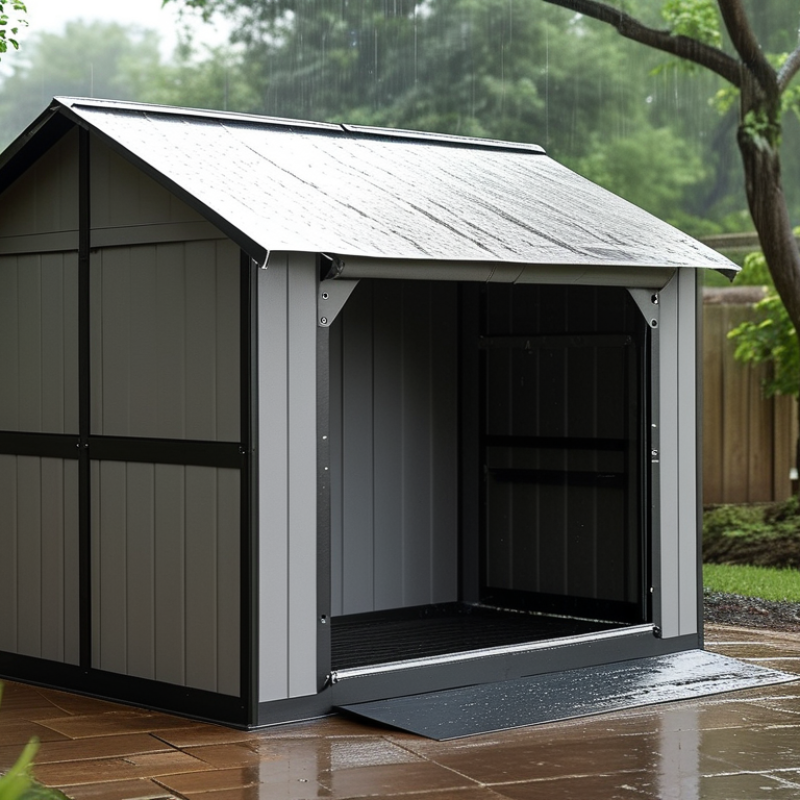
Top Outdoor Dog Kennel Manufacturers for Global Buyers

Global Demand Signals: APPA Reports 65.1 Million U.S. Dog-Owning Households

The 65.1 million U.S. dog-owning households reported by the American Pet Products Association (APPA) reveal strong demand for practical outdoor housing. This figure comes from the 2023–2024 APPA National Pet Owners Survey. It is more than a population statistic. It signals recurring needs for secure exercise areas, weather protection, and easier cleaning.

Global buyers should compare kennel manufacturers through measurable details. A well-designed unit may use galvanized steel, reinforced welds, and panels that resist corrosion after repeated rain. Raised flooring can improve drainage. Removable trays can reduce cleaning time. Shade panels matter in hot regions, while wind-resistant anchoring matters in colder climates. Small details often affect customer complaints.

European demand supports the same direction. FEDIAF’s 2024 European Pet Population and Industry Data reported approximately 89.7 million dogs across Europe, based on 2023 figures. However, household numbers do not predict every purchase. Apartment living, climate, local space limits, and dog size can change specifications sharply. I would not treat one survey as a complete global forecast. That would be too simple. Manufacturers serving international buyers should provide modular dimensions, clear material specifications, replacement parts, and practical installation guidance. These features help importers evaluate quality before placing larger orders.

Manufacturer Qualification Through ISO 9001, CE Marking, and Factory Audits

Top Outdoor Dog Kennel Manufacturers for Global Buyers

For global buyers, manufacturer qualification should begin beyond catalog photos. ISO 9001 indicates a controlled quality management system, not automatic product excellence. Ask for the current certificate, issuing body, scope, and covered production site. The address must match the factory you plan to audit. Check how complaints, design changes, and nonconforming materials are recorded. Real evidence matters.

CE marking requires careful interpretation. It applies only when the kennel or included components fall under relevant European requirements. A basic metal kennel may not require CE marking, while electrical gates or powered accessories may. Request the applicable declaration, test reports, and technical documentation. Do not accept a logo alone. That is a warning sign.

Factory audits reveal practical details certificates may miss. Inspect weld consistency, rounded edges, drainage, coating thickness, and gate alignment. Review incoming-material records and batch traceability. Ask workers to demonstrate final inspection procedures. Independent auditors can compare documents with actual production. Photos help, but they are not proof.

An audit is only a snapshot. Certificates can expire, and even careful auditors may miss a weak process. I have seen tidy samples hide inconsistent packaging and loose hardware. Buyers should test several units before placing large orders. Reliability grows through repeated evidence, not confident promises.

Material Comparison: 275 g/m² Galvanized Steel Versus 304 Stainless Steel

Top Outdoor Dog Kennel Manufacturers for Global Buyers

Material Comparison: 275 g/m² Galvanized Steel Versus 304 Stainless Steel

In outdoor kennel inspections, 275 g/m² galvanized steel often provides practical protection at a controlled cost. The zinc coating shields carbon steel from rain, humidity, and routine cleaning. It is not the steel thickness. It describes the total zinc coating mass on both surfaces. That distinction matters when comparing supplier specifications. Inspect welds, cut edges, and corners carefully. These areas can lose protection sooner than flat panels.

304 stainless steel offers stronger resistance to corrosion, especially where moisture remains after washing. Its smooth surface also reduces places where dirt and bacteria can collect. However, 304 is not immune to rust. Salt air, harsh chemicals, and neglected scratches can still cause staining or corrosion. Regular rinsing helps. Coastal buyers may need more frequent maintenance than inland facilities.

The better choice depends on climate, cleaning routines, budget, and kennel lifespan. Galvanized steel suits many inland projects with good drainage and covered resting areas. Stainless steel becomes more convincing near coastlines or in high-use boarding environments. I have seen buyers focus on metal grade while overlooking fasteners and floor contact. That is a costly mistake. Small details matter. A strong frame can still fail when water sits beneath its posts. My own view is less absolute now: material selection should follow site conditions, not marketing language.

Z275 galvanized steel provides a nominal total zinc coating mass of 275 g/m² across both surfaces. Grade 304 stainless steel typically contains approximately 18% chromium and 8% nickel by mass. These values describe material specifications rather than a direct ranking of outdoor service life, which also depends on climate, fabrication quality, drainage, and maintenance.

Safety Benchmarks: 50 mm Mesh, 1.8 m Panels, and Escape Prevention

Outdoor dog kennel manufacturers serving global buyers should treat safety measurements as working specifications, not decorative numbers. A 50 mm mesh opening can reduce escape risks while allowing airflow and visibility. It also needs strength. Thin wire or poor welds may bend under repeated pushing, biting, or impact. During inspections, I check weld continuity, frame alignment, and corrosion protection. Gloves help reveal rough edges. Sharp projections should not remain.

Panel height matters too. At 1.8 m, panels create a stronger barrier for many active dogs. However, height alone does not prevent escape. Some dogs climb mesh, exploit corners, or squeeze beneath weak sections. Manufacturers should assess climbing behavior, panel joins, and ground clearance together. Secure roof sections may help in high-risk settings, but they can reduce ventilation if designed poorly.

Door hardware deserves careful testing. Use self-closing hinges and a latch that resists nose pressure. Test the latch repeatedly, not just once. On uneven soil, small gaps can appear beneath panels after installation. Reliable suppliers should provide anchoring guidance, inspection records, material details, and clear maintenance instructions. Buyers should also request evidence of dimensional checks and load testing. Yet specifications can mislead when installation quality is ignored. One weakness remains: no single measurement suits every dog or climate. Real-world trials, local weather conditions, and regular inspections still matter.

Export Selection Metrics: MOQ, Lead Time, Incoterms, and Container Yield

Top Outdoor Dog Kennel Manufacturers for Global Buyers

Selecting an outdoor dog kennel manufacturer requires more than comparing unit prices. Export buyers should examine MOQ, production lead time, Incoterms, and container yield together. A low MOQ may suit market testing, but it can increase packaging and inspection costs. Confirm whether the quoted quantity applies per model, color, or complete order.

Lead time should include material preparation, welding, coating, packing, and port delivery. Ask for a written production schedule. A practical supplier should explain delays caused by peak seasons or custom dimensions. Incoterms also change the real purchase cost. Under FOB, the buyer usually manages ocean freight after loading. Under DDP, delivered pricing may look simpler, but import responsibilities must be checked carefully.

Container yield needs physical evidence. Request packed carton dimensions, loading diagrams, and the number of kennels per 20-foot or 40-foot container. For example, bulky roof panels can leave unused space above stacked cartons. That space becomes lost margin. Some suppliers optimize nesting, but excessive compression may bend wire panels. We have seen attractive loading plans fail during actual loading. A trial shipment, random carton measurement, and pre-shipment inspection provide stronger evidence than a spreadsheet. It is also wise to compare galvanized steel thickness, weld points, door hardware, and drainage details before approving mass production.

Top Outdoor Dog Kennel Manufacturers for Global Buyers - Export Selection Metrics: MOQ, Lead Time, Incoterms, and Container Yield
Manufacturer Profile Primary Product Range Typical MOQ Sample Lead Time Bulk Lead Time Common Incoterms 40-Foot Container Yield Main Materials Weather-Resistance Features Export Documentation Readiness
High-volume metal kennel producer Modular chain-link runs, welded-panel kennels, roofed dog enclosures 50–100 sets 7–15 days 30–45 days FOB, FCA, CIF 120–180 sets
Flat-packed, size dependent
Galvanized steel, powder-coated steel, HDPE roof panels Hot-dip galvanizing, powder coating, raised floor options Commercial invoice, packing list, certificate of origin, fumigation support where required
Custom welded-panel specialist Heavy-duty kennel panels, double-door systems, commercial boarding runs 20–50 sets 10–20 days 35–55 days EXW, FOB, CIF 70–120 sets
Higher steel content reduces yield
Steel tube, welded wire mesh, aluminum fittings Anti-corrosion coating, sealed weld points, sloped roof compatibility Standard export documents; product drawings commonly available
Retail-ready outdoor kennel supplier Foldable kennels, compact pet runs, consumer DIY enclosure kits 100–300 units 7–14 days 25–40 days FOB, FCA, DAP 220–420 units
Efficient carton packing
Galvanized wire, painted steel, plastic connectors Galvanized mesh, UV-resistant covers, drainage openings Barcode and carton-label support; standard commercial documents
Premium aluminum-frame manufacturer Lightweight kennel systems, portable runs, corrosion-sensitive applications 30–60 sets 12–21 days 40–60 days EXW, FOB, CIF 90–150 sets
Varies by frame profile
Aluminum alloy, stainless-steel hardware, composite panels Excellent corrosion resistance, anodized or powder-coated surfaces Material specifications and packing details usually supplied
Kennel-and-dog-house integrated supplier Outdoor runs with insulated dog houses, winterized kennel packages 50–100 sets 10–18 days 35–50 days FOB, CIF, DAP 80–140 complete sets
House components affect loading
Steel mesh, sandwich panels, plywood or plastic floor systems Insulated panels, waterproof roofing, elevated sleeping areas Product assembly instructions and export packing lists commonly available
Heavy-duty institutional supplier Animal shelters, veterinary facilities, boarding centers, multi-run systems 10–30 systems 15–30 days 45–75 days FOB, CIF, DDP by quotation 40–90 systems
Project layout dependent
Heavy-gauge galvanized steel, stainless hardware, concrete-compatible panels High-load frames, reinforced doors, corrosion-resistant fasteners Detailed drawings, inspection records, packing lists, and origin documents
Small-batch customization workshop Private-label kennel kits, special dimensions, logo-ready packaging 10–30 sets 15–25 days 45–70 days EXW, FOB 50–100 sets
Custom packaging may reduce yield
Steel, aluminum, mesh, waterproof fabric, composite boards Finish options, custom roof coverage, replaceable panels Documentation available after order confirmation; verify destination requirements
Flat-pack logistics-focused supplier Knock-down kennels, stackable panels, e-commerce shipment formats 100–250 units 7–14 days 25–45 days FCA, FOB, CIF 250–500 units
Optimized for carton utilization
Galvanized steel, welded wire, corrugated cartons Protective coating, moisture-resistant packaging, replaceable parts Carton dimensions, gross weights, HS-code references, and shipping marks normally provided
Indicative export benchmarks for buyer comparison. Actual MOQ, pricing, production time, container yield, and Incoterm availability depend on kennel dimensions, material thickness, customization, destination regulations, and seasonal capacity.

FAQS

What does 275 g/m² galvanized steel mean?

It describes the total zinc coating mass on both steel surfaces. It is not the steel thickness. Check the supplier’s specification carefully.

When is galvanized steel a practical choice?

It suits many inland kennels with good drainage and covered resting areas. The zinc coating helps resist rain, humidity, and routine cleaning. Water should not remain beneath posts.

Why might 304 stainless steel suit coastal kennels?

It generally resists corrosion better when moisture remains after washing. This can help near coastlines or in busy boarding facilities. Salt air still requires regular rinsing.

Can 304 stainless steel rust?

Yes, it is not completely rust-proof. Salt, harsh chemicals, and neglected scratches may cause staining or corrosion. Maintenance still matters.

Is a 50 mm mesh opening safe for every dog?

No single mesh size suits every dog. A 50 mm opening can reduce escape risks while preserving airflow and visibility. Wire strength and weld quality matter too.

Is a 1.8 m panel high enough to prevent escapes?

It creates a stronger barrier for many active dogs. However, some dogs climb mesh or exploit weak corners. Height alone is not enough.

What door features should an outdoor kennel include?

Choose self-closing hinges and a latch that resists nose pressure. Test the latch repeatedly. One test is not enough.

What details are often missed during kennel inspections?

Inspect welds, cut edges, corners, fasteners, and floor contact. Look for sharp projections and gaps beneath panels. I once focused too much on metal grade. Small details mattered more.

Conclusion

This guide helps global buyers evaluate an Outdoor Dog Kennel supplier through demand, quality, safety, and export-readiness criteria. With approximately 65.1 million U.S. households owning dogs, the market requires manufacturers that can deliver consistent capacity and dependable construction. Buyers should review ISO 9001 quality systems, CE-related documentation where applicable, factory audit results, production records, and inspection procedures before placing an order.

Material selection is equally important. 275 g/m² galvanized steel offers a practical balance of corrosion resistance, strength, and cost, while 304 stainless steel provides enhanced durability for demanding environments. Safety assessments should consider 50 mm mesh spacing, 1.8 m panel height, secure latches, stable frames, and design features that reduce escape risks. Finally, compare MOQ, lead time, Incoterms, packaging, container yield, and after-sales communication to identify a supplier capable of supporting efficient, compliant, and reliable international delivery.


Ethan

Ethan

Ethan is a seasoned marketing professional with a deep expertise in our company's innovative product line. With a passion for sharing knowledge and insights, he takes the lead in regularly updating our corporate blog, where he explores industry trends, product features, and effective marketing......